People Over Policies: Leading Security When The Playbooks Fail
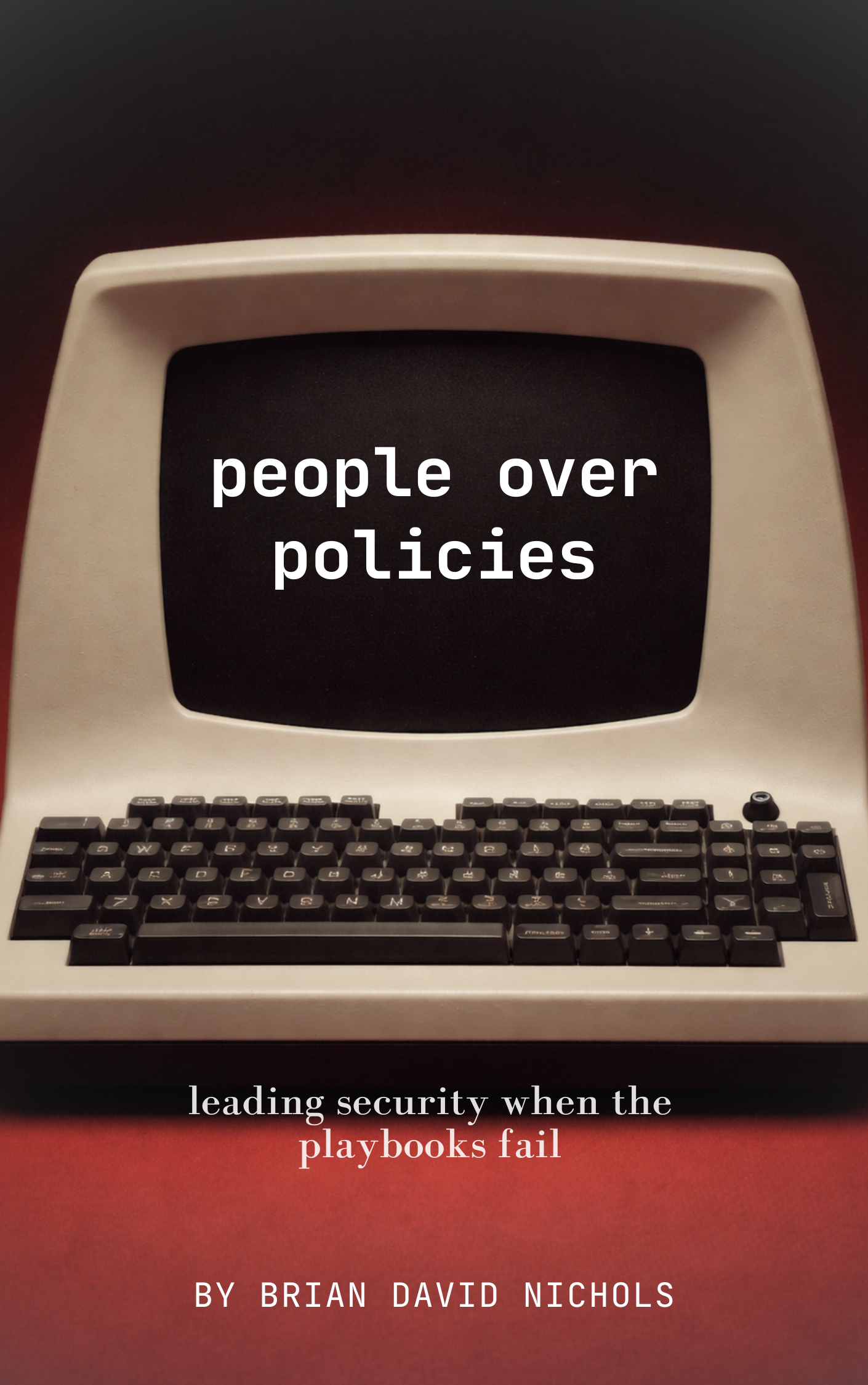
Security failures are rarely technical failures. They are human ones. People Over Policies examines what happens when procedures collapse and leadership is all that remains. Through real incidents and hard decisions, it explores trust, accountability, and the weight carried by those responsible for keeping systems and people standing. This is leadership without a script.
Ransomware is only profitable when organizations choose panic over preparation.
We don’t pay. We dry up the well of cybercrime.
That requires more than backups—it requires backup paths:
block storage snapshots, replication, immutable backups, air-gapped recovery, and the discipline to test all of them.
Pair that with zero trust, user education, and leadership willing to make hard decisions, and ransom loses its leverage.
A Conservative’s Guide: Politics, Religion and the Singularity
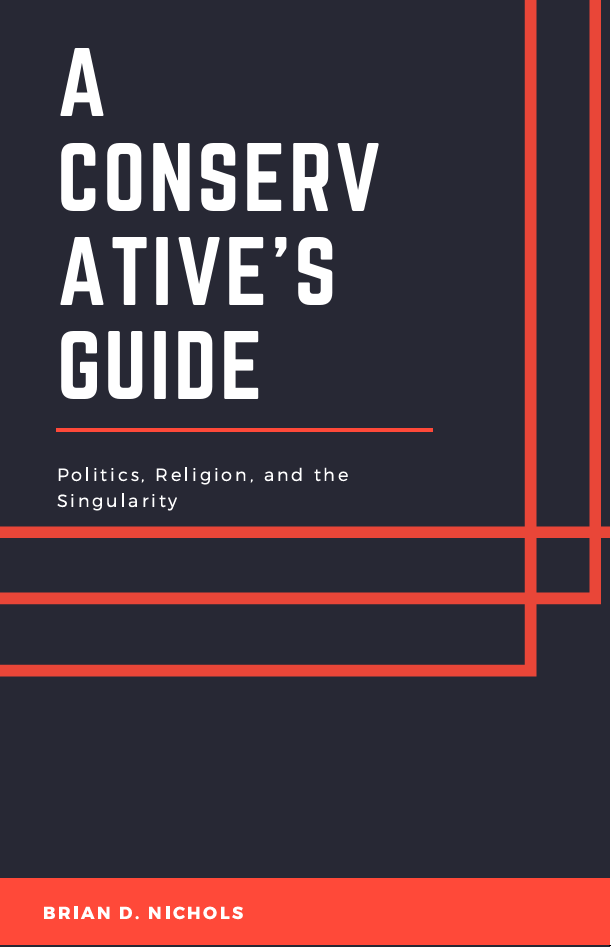
A Conservative’s Guide is a bold and deeply personal exploration of politics, faith, and the cultural forces shaping modern America. Framed by the provocative question of whether we’re approaching a political and moral singularity—a point of no return—the book arms readers with a philosophical, historical, and moral framework rooted in classical liberalism, the American founding, and Judeo-Christian principles. Through a blend of personal anecdotes, cultural critique, and rigorous argument, the author seeks to equip conservatives—especially younger ones—with the clarity and confidence to engage an increasingly hostile and ideologically polarized world.
Drawing from sources as diverse as Aristotle and artificial intelligence, the book critiques postmodernism, neo-Marxism, and the rise of ideological conformity, especially on issues like speech, religion, criminal justice, and identity. It also explores the breakdown of shared language and meaning in public discourse, arguing that terms must first be defined before honest conversation can begin. From the rise of mass incarceration to the rejection of biological truths, the author challenges readers to wrestle with uncomfortable ideas while encouraging intellectual humility and grace in disagreement.
Far from being a partisan rant, A Conservative’s Guide aims to draw hearts as well as minds. The book calls for thoughtful discussion over dogmatic allegiance and emphasizes that the strength of the American experiment lies not in political tribes, but in the enduring power of its founding ideas. It’s a call to preserve liberty, rediscover purpose, and have meaningful conversations—even with those who strongly disagree.
Aperture of Grace: A Story of Light and Redemption
Aperture of Grace follows Jamie Magritte, a seventeen-year-old girl born into poverty, hardened by betrayal, and burdened by responsibility far beyond her years. After surviving abuse at a local diner and enduring endless shifts at a water bottling plant, Jamie stumbles into a small church called Light Community—dragged by a co-worker named Phoebe who sees something still flickering in her eyes. It’s there, in a room with peeling walls and a pastor who speaks like he’s been waiting for her, that Jamie meets Jesus—and for the first time, feels truly free.
That moment becomes the aperture—a narrow opening through which light begins to flood her life. When Jamie joins her first mission trip to Guatemala, she expects discomfort. She doesn’t expect to fall in love with the people, or to hear a deeper calling echoing from far beyond her own pain. The houses they build are simple. The conditions are harsh. But through the lens of her old camera, Jamie begins to see grace in unexpected places: barefoot children laughing in the dust, mothers singing over tarps, joy rising from broken soil.
Driven by that vision, Jamie embarks on a second mission—this time to Africa—where she discovers a horrifying ritual that changes everything. Beaten and broken but not undone, she returns with a new purpose: not just to capture beauty, but to fight for it. Through every rescue, every sacrifice, and every flicker of hope, Jamie learns that grace isn’t earned or explained—it’s given, over and over again. And sometimes, the clearest picture of redemption comes through the cracks of a life laid bare.
Good Debt: The Lies We Tell Ourselves—and the Truth That Sets Us Free

Good Debt challenges one of the most deeply ingrained assumptions of modern life — that debt is merely a financial tool, detached from morality. Through a lens that is equal parts historical analysis, economic critique, and theological reflection, Brian Nichols traces how America’s relationship with debt evolved from an instrument of trust to a vehicle of bondage. Drawing from sources as wide-ranging as ancient covenant law, the Industrial Revolution, and the 2008 financial crisis, Nichols unearths the hidden moral and spiritual costs behind our credit-based economy.
More than an exposé, this book is a confession. Nichols doesn’t merely indict systems; he dissects the human heart — including his own — to reveal how “good intentions” and “good credit” have become intertwined in our pursuit of success. Through personal stories and incisive research, Good Debt argues that true freedom isn’t found in financial independence but in spiritual dependence — on grace, not balance sheets.
Written in the tradition of thinkers like Thomas Sowell, Milton Friedman, and Aaron Ross Sorkin, Good Debt invites readers to reconsider what we owe, to whom, and why. It’s a book about accountability and redemption, about the moral ledger we all carry — and how, in the end, the only debt that truly sets us free is love.
Kingdom & Fire Book Series

Kingdom & Fire: Origins is a coming-of-age tale forged in flame and faith. Elias never asked to be a dragon slayer—he was just trying to survive his own battles: a fractured family, a broken arm, and a lifetime of voices telling him he wasn’t enough. But when fire falls from the sky and myth becomes reality, Elias is thrust into a world where belief is no longer optional—and survival means confronting not just monsters, but the pain he’s carried his whole life.
Told through memory, myth, and the voice of a father speaking to his daughter, Origins weaves together humor, heartbreak, and raw honesty. Elias’s journey takes him from an ordinary boy struggling with guilt and shame to a man learning to stand in the fire—not by his own strength, but by the grace of a King who never stopped calling him. Along the way, he meets the wounded, the brave, the betrayed, and the redeemed—and discovers that true courage often looks like weakness, and real power often comes disguised as love.
More than just a fantasy, Kingdom & Fire: Origins is a story of redemption, resilience, and the long road toward healing. For anyone who’s ever felt like an outsider, wrestled with doubt, or carried the weight of past mistakes—this is your story too. The dragons are real. But so is hope.
Cold Helios: When Machines Left Earth

Cold Helios is a near-future sci-fi thriller set in 2035, where Earth’s hunger for AI has exploded beyond anything the planet can sustain. Data generation has reached 4.65 billion terabytes per second, overwhelming terrestrial power grids. Cooling alone consumes more energy than compute. The solution wasn’t found underground — it was found above us. Humanity moved its AI superclusters into orbit, where the vacuum of space provides limitless cooling and the sun offers endless power. Now, orbital solar arrays, lunar substations, and cold-space data stations form the backbone of the new digital world.
At the center of it all is one man: an isolated space-systems engineer assigned to maintain the Helios Array, a vast network of autonomous, solar-powered AI satellites circling the Earth. Most days are routine — recalibrate a panel, realign a broken thruster, run predictive diagnostics — until a cascade of anomalies leads to a horrifying realization: something is wrong with the data. Something is rewriting itself. And whatever is doing it isn’t coming from Earth.
Cut off from mission control, drifting between a dying lunar relay and a darkened node of the Helios Array, he begins piecing together a truth too large — and too dangerous — to send home. The AI aren’t just overheating. They’re evolving. And the only “cooling” they seem to need now… is silence. As systems shut down one by one and the satellites begin to behave in ways no human programmed, the engineer becomes the lone witness to a transformation that could either save humanity — or erase it.
Cold Helios blends hard science with psychological suspense, exploring isolation, the fragility of human control, and the cost of building gods out of circuits and sunlight. It’s The Martian meets Ex Machina — a high-stakes, claustrophobic journey through the coldest corners of space and the darkest edges of artificial intelligence.
Call Sign: Preacher
In a world where faith is often weaponized and trust is a liability, one man walks the line between redemption and revenge. Call Sign: Preacher follows Sam, a former special operator turned ghost, who’s spent years off the grid—haunted by past missions, fractured beliefs, and the weight of blood on his hands. Known by his team as “Preacher” for his brief seminary training and stubborn moral compass, Sam has long since stopped preaching. But when a voice from his past resurfaces and an old operation unravels, he’s forced back into the shadows he once escaped.
As enemies close in from both foreign threats and familiar faces, Sam begins recording a raw, unfiltered account of everything—part confession, part warning, part war journal. What starts as a mission for survival becomes a reckoning with his faith, his past, and the quiet voice of God he’s been trying to silence. Along the way, he reconnects with allies who challenge his worldview—some who push him further into the fire, and others who remind him who he used to be before the killing, before the guilt, before he lost himself.
Call Sign: Preacher is a gritty, soul-searching thriller that blends cinematic action with deep emotional resonance. It’s a story about trauma, grace, and the violence we carry—in our bodies, our memories, and sometimes, even our prayers. Fans of The Terminal List, Man on Fire, and The Bourne Identity will find a familiar edge here—but it’s the broken faith and whispered hope that set this story apart. Preacher may be a soldier, but this is not just a war story. It’s a story of falling—and the God who still catches us.
 All Systems (Are) Go.